Sanctuary
Byron Shire Rooster Dumping Pilot Program
Pilot program tackling rooster dumping in Byron Shire through education, council cooperation, and school reform to create a scalable national model.
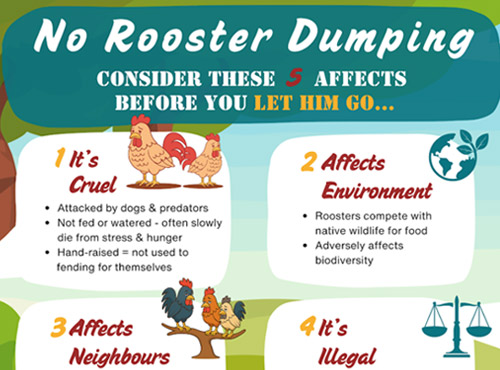
With support from our funding partners, the Rooster Dumping Pilot Program in the Byron Shire is now underway. This work aims to reduce rooster dumping at both the cause and the outcome level by improving education, changing school practices, and supporting local councils and rescue groups.
To begin, here is a short video that introduces the program.
Program Goals
This pilot has four key objectives within the Byron Shire:
- Stop school chick hatching programs
- Reduce rooster dumping across the region
- Offer Hen Zen Workshops as a kinder alternative for early education settings
- Create a model that can be replicated by councils in other parts of Australia
Progress So Far
Council approval
The Byron Shire Council has formally approved the pilot. This approval took several months of presentations and discussions with councillors, but the outcome now allows the program to move ahead with council involvement.
A key part of the pilot involves the installation of metal signs at known dumping locations throughout the shire. These signs will warn against rooster dumping and direct the public to seek help through the rescue program. Installation is expected during January and February.
Rest stops along the highway fall under the NSW Road Traffic Authority, so we are currently working through their approval process for signage at those locations.
A dedicated rescue page has been built and will go public once the signage is installed.
School and early learning outreach
Outreach has been completed across 31 schools, preschools, kindergartens, and early learning centres within the shire.
Findings so far:
- At least 12 of these settings currently run or have recently run chick hatching programs
- Schools were open to understanding why hatching programs are harmful and were interested in alternatives
- There is strong interest in Hen Zen Workshops as an educational replacement
During this process we discovered that SACEC, the NSW Education Department body for animal welfare, already has guidelines for animals in schools. However, they were unaware of the extent of chick hatching programs. We see this as an opportunity to gain government level support for discouraging these programs more broadly. If successful, this would extend far beyond the Byron Shire.
Hen Zen Workshops
Hen Zen Workshops teach calm, respectful handling of chickens and give children a positive alternative to chick hatching programs. These sessions include outdoor time, gentle interaction, reading, and creative activities. Workshops conclude with a joint art piece that features footprints from both the children and the chickens.
Workshops in the Byron Shire will begin early in the new year. The draft workshop module is already complete based on trial workshops previously carried out at Coolnyn State School in Queensland. Final edits will be made in January so that schools can preview the content before bookings commence.
Partnerships
Outreach to Animals Australia and the Animal Justice Party has not yet commenced. Early efforts were focused on council approval, research, and direct engagement with schools. These organisations remain potential partners for later advocacy and national expansion.
Digital experience
Alongside the practical work, a virtual Life of a Chicken experience is currently being developed. This will function as part of the educational content delivered through the program. Additional design work may be required to complete it.
Next Steps
With the pilot now approved and foundational work complete, the next phase includes:
- Signage installation across known dumping sites
- Launch of the public rescue page
- Hen Zen Workshop delivery to priority schools
- Finalisation of RTA approvals for highway signage
- Engagement with SACEC to discourage hatching programs statewide
- Targeted advocacy to expand the model into other councils
If the Byron Shire pilot succeeds, it will become the first council-led example of a practical solution to rooster dumping in Australia. The long-term goal is to create a model that can be adopted nationally, improving welfare outcomes for both animals and communities.